Monday, December 6, 2010

Talk PR to me!

‘Media spheres are becoming increasingly porous’ (Bennett 2003: 33) 

‘People who have long been on the receiving end of one-way mass communication are now increasingly likely to become producers and transmitters’ (Bennett 2003:34)


-  Reference: Bennett, W. (2003) New Media Power: the internet and global activism In Couldry, N. & Curran, J. (eds) Contesting Media Power: Alternative Media in a Networked World (Rowman & Littlefield Publishers Inc).

Find your roots

In relation to PR, it seems that the role of the media is reflecting and adapting to the way that society has changed over the years. The media maintains its “roots” in liberal pluralism, but has had to adjust to social and economic change, the rise of the control and influence of the political economy, developments in technology and the influence of public interest and opinion as seen in the illustration. This visual intends to show what elements have influenced the media landscape and to suggest an optimum relationship for how public relations and the media should work together.

Social media may have won the battle, but what about the war?

Academic and Professional Debate: SOCIAL MEDIA
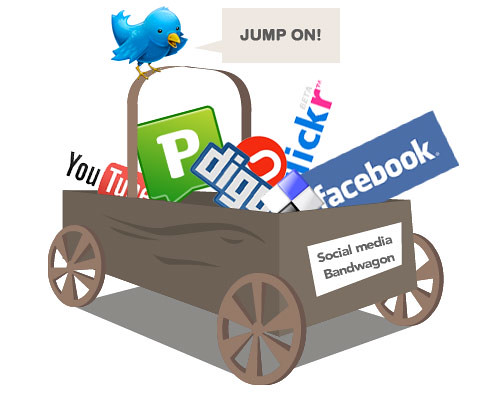
The overwhelming consensus among both academics and professionals suggests that organisations should embrace the use of social media to communicate with stakeholders. The rapid technological advances of the 21st century have created an environment in which mass participation and two-way communication can occur broadly and instantaneously (Enzensberger, 2003: 262). Another asset of this medium is unparalleled flexibility that, ‘easily transcends, space, class and cultural constraints’ (Schmitz, 1997: 85). Organisations now have the ability to reach stakeholders individually and consider beneficial adaptation based on specific feedback.
While there are many positive aspects to the use of social media potential drawbacks and shortcomings must be considered. Agre (1998: 86) noted in regards to website design that without the use of strategic stakeholder targeting, companies merely achieve ‘an unarticulated sense of what they like without thinking through issues.’  If the benefits of this new medium are to be reaped, the approach to its use must be as thoroughly planned and strategically sound as the use of traditional media channels for cooperate communication. Suitability must also be considered. Robles (2010) argues that business to business communication has been slow to adopt social media due to a recognition that social media platforms ‘don’t always offer the best opportunities to build meaningful relationships’.  Organisations have specific stakeholders and therefore social media may not be necessary or appropriate and involvement due merely to a naïve concern of appearing to lack modernity should be strongly avoided.

What the experts are saying, tweeting... whatever.

Matt Bright's "Open Road: Engaging in a new way" in PR Week

Organisations that do Blogs well ...


Twitter Me This!!


8 reasons companies need to tweet !

1.Communication:

It is important to stay on top of news, trends and resources that are associated with your organization . Communicating via twitter reduces the spending costs that companies use on focus groups to access this type of information that is relevant to your organization.

2. Brand recognition:

This is a way of reminding your clients that you are a worthy business and this forum can be used to update your publics on all the corporate social responsibilities you take part in.

3. Simplicity: This is Twitter's comparative advantage over other types of social media and social networking sites. A limit of 140 character messages can be posted and users are unable to post links, pictures, videos, etc. This helps reduce the noise and enables you to communicate efficiently and directly with your followers.

4. Reputation: Our organization can be transparent and operate in an open system on Twitter. This type of micro-blogging can give your company a strong online presence.

5. Attract new clients: It is a non-coercive method of attracting new clients since they can chose to "follow" you.

6. Building Networks of Friends: It is a perfect opportunity to expand your network and build friends that will be there for you in times of issues and crises.

7. Seachability: Tweets are searchable and this means that you can find tweets on any topic that interests you.

8. Real-time : Your organization can participate in real time quality dialogue with people worldwide.

Twitter success stories: missing woman found ! Chris Wilson was able to find his sister in law who went missing with the help of friends on Twitter. A network of supporters immediately formed around him and new friends were able to provide information in order to begin his search.

Link http://twitter.com/aithene

References
http://technmarketing.com/web/top-5-reasons-to-tweet/

http://business.twitter.com/twitter101/best_practices

Micek, D. & Whitlock, W. (2008). Twitter Revolution - How Social Media an Mobile marketing is Changing the Way we Do business and Market Online. United States : Xeno Xpress.

This will be a Social Media Hummer one day..

Let us define it for you


Effective media relations is the continuous strategic assessment of an engagement with media, using appropriately diverse channels. It should be for the primary purpose of enhancing the organization’s reputation and building relationships with publics that are relevant to that organization. It should also serve to build relationships with journalists and other gatekeepers of contemporary media for the purpose for future PR activity.